
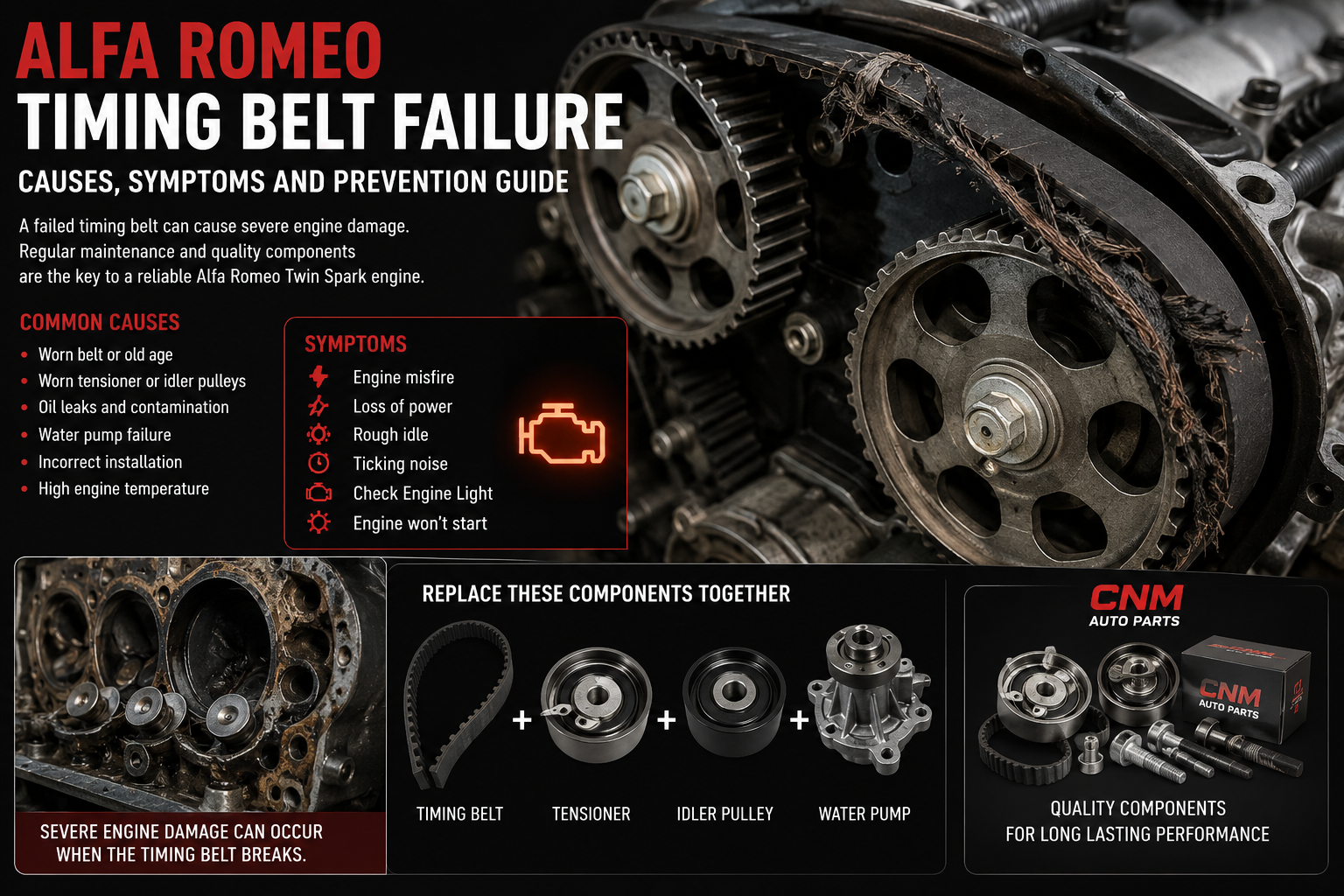
Timing belt failure is one of the most serious engine problems that can affect an Alfa Romeo Twin Spark engine. A broken or incorrectly installed timing belt can cause severe internal engine damage, resulting in expensive repairs. Understanding the warning signs and following the correct maintenance schedule can help prevent catastrophic failure.
At CNM Auto Parts, we specialize in manufacturing high-quality replacement components for Alfa Romeo engines. This guide explains why timing belt failures occur, how to recognize the symptoms, and how to reduce the risk of engine damage.
What Does the Timing Belt Do?
The timing belt synchronizes the crankshaft and camshafts, ensuring that the engine valves open and close at the correct time. In Alfa Romeo Twin Spark engines, precise valve timing is essential for smooth operation, performance, and engine reliability.
If the timing belt slips or breaks, the pistons and valves can collide because these engines are interference engines. This often results in bent valves, damaged pistons, and costly cylinder head repairs.
Common Causes of Timing Belt Failure
Several factors contribute to premature timing belt failure:
- Exceeding the recommended replacement interval
- Poor-quality aftermarket timing belt kits
- Worn or seized tensioners and idler pulleys
- Water pump bearing failure
- Oil contamination from leaking camshaft or crankshaft seals
- Incorrect installation or timing alignment
- Excessive engine heat
Even a small oil leak can significantly reduce the service life of the timing belt.
Symptoms of a Failing Timing Belt
Drivers may notice one or more of the following symptoms:
- Engine misfires
- Rough idle
- Difficulty starting
- Loss of engine power
- Unusual ticking noises from the timing cover area
- Check Engine Light
- Engine suddenly stops while driving
- Engine cranks normally but will not start
If any of these symptoms appear, the timing system should be inspected immediately.
Which Alfa Romeo Models Are Most Affected?
Timing belt maintenance is especially important for:
- Alfa Romeo 145 Twin Spark
- Alfa Romeo 146 Twin Spark
- Alfa Romeo 147 Twin Spark
- Alfa Romeo 156 Twin Spark
- Alfa Romeo GT Twin Spark
- Alfa Romeo 166 Twin Spark
Engine variants include:
- 1.6 Twin Spark
- 1.8 Twin Spark
- 2.0 Twin Spark
Recommended Replacement Interval
Although recommendations vary by driving conditions, many Alfa Romeo specialists advise replacing the timing belt every:
- 60,000–80,000 km (37,000–50,000 miles), or
- Every 4–5 years, whichever comes first.
Vehicles driven in hot climates or heavy traffic may require more frequent inspections.
Why the Variator Should Be Replaced at the Same Time
Many Alfa Romeo Twin Spark owners replace the timing belt without inspecting the camshaft variator.
A worn variator often produces the well-known diesel-like noise during cold starts. Since replacing the variator requires access to the timing belt system, changing both components together reduces labor costs and helps avoid future repairs.
Using an improved variator repair solution during scheduled timing belt service is a practical way to maintain long-term engine performance.
Preventive Maintenance Tips
To maximize engine reliability:
- Replace the timing belt, tensioners, and idler pulleys together.
- Inspect the water pump during every timing belt service.
- Repair oil leaks before installing a new timing belt.
- Use high-quality replacement components.
- Follow factory torque specifications and timing procedures.
- Listen for unusual noises during cold starts.
Preventive maintenance is significantly less expensive than repairing engine damage caused by timing belt failure.
Conclusion
Timing belt failure is one of the few maintenance issues that can destroy an otherwise healthy Alfa Romeo Twin Spark engine. Regular inspections, quality components, and timely replacement are essential to protecting your investment.
At CNM Auto Parts, we are committed to developing durable replacement components that help Alfa Romeo enthusiasts maintain their vehicles with confidence. Proper maintenance today can prevent major engine repairs tomorrow.
Related Articles
- Alfa Romeo Variator Noise: Causes, Symptoms and Repair Guide
- Oil in Spark Plug Wells on Alfa Romeo Twin Spark
- Alfa Romeo Vacuum Pump Gasket Leak Explained
- Common Twin Spark Engine Problems
- How to Replace an Alfa Romeo Variator
Keywords: Alfa Romeo Timing Belt Failure, Twin Spark Timing Belt, Alfa Romeo 156 Timing Belt, Alfa Romeo 147 Timing Belt, Timing Belt Symptoms, Timing Belt Replacement, Variator Repair, Alfa Romeo Engine Maintenance