
Seeing a thick, milky substance in your coolant reservoir is enough to make any vehicle owner panic. For owners of vehicles equipped with the 3.0 V6 dCi V9X engine (commonly found in Nissan, Renault, and Infiniti models), mixing oil and coolant often immediately sparks fears of a blown head gasket and a massive repair bill.
However, before you prepare for the worst, there is a hidden, much smaller, and far less expensive culprit you need to check first: the oil cooler gasket.
The “Milkshake” Nightmare: What is Happening?
The V9X engine utilizes an oil cooler to keep engine oil temperatures at optimal levels. This cooler uses the engine’s engine coolant to absorb excess heat from the oil. Because oil and coolant flow in very close proximity through the oil cooler assembly, they are kept separate by a set of specialized rubber and metal gaskets.
Over time, due to extreme heat cycles, high pressure, and aging materials, the oil cooler gasket can degrade, flatten, or crack. When this seal fails, the higher-pressure oil forces its way into the cooling system, creating that dreaded “milkshake” look in your radiator or coolant reservoir.
Common Symptoms of a V9X Oil Cooler Gasket Failure
Diagnosing this issue early can save your engine from catastrophic failure. Watch out for these telltale signs:
- Milky Coolant: The coolant turns into a thick, brown, or yellowish sludge.
- Oil Depletion: You are losing engine oil but cannot see any visible leaks under the car.
- Overheating Engine: The thick oil/coolant mixture cannot circulate properly, leading to poor cooling efficiency and higher engine temperatures.
- Swollen Hoses: The petroleum in the engine oil attacks the rubber coolant hoses from the inside, causing them to swell and soften.
The Good News: It’s Just a Gasket!
The biggest relief for V9X owners is realizing that this terrifying symptom is often just a simple seal failure. You do not necessarily need a new engine or a head gasket replacement. You just need to replace the compromised oil cooler gasket.
However, labor is the real cost here. Reaching the oil cooler assembly on a V9X engine requires significant dismantling. Because of the labor-intensive nature of this job, you must ensure that the replacement gasket you install is built to last.
Mechanic’s Tip: Never reuse an old oil cooler gasket, and avoid cheap, unverified aftermarket seals. Using a low-quality gasket means you might find yourself doing this heavy-labor job all over again in a few months.
Getting the Right Part for the Job
To fix this issue permanently, you need a high-quality gasket that can withstand the severe thermal expansion and fluid pressures of the 3.0 V6 dCi engine.
(Note: Locate the oil cooler assembly on your engine to ensure you are replacing the correct seals. See our detailed exploded view diagram below to pinpoint the exact location of the gasket).
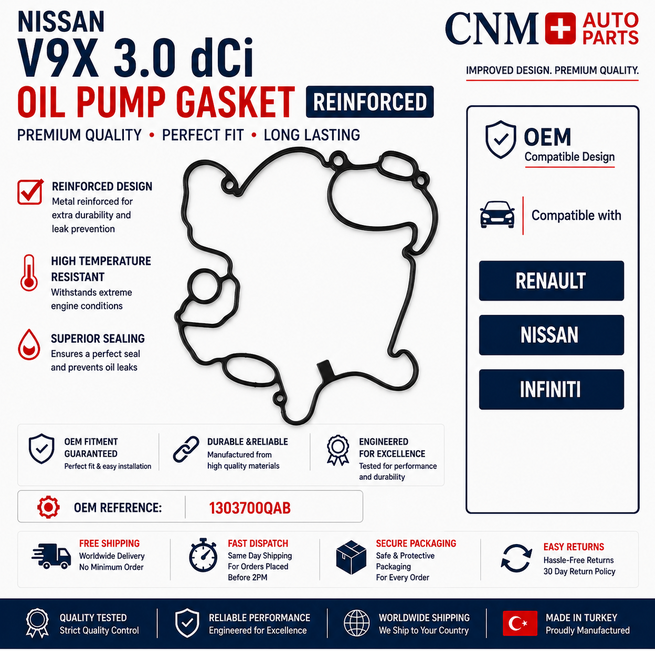
Don’t let a failed seal ruin your engine or drain your wallet with repeat labor costs. Fix the issue once and for all with a precision-engineered replacement.
1303700QAC x 1
1303700QAA x 1