
You are enjoying a drive in your Alfa Romeo 159, Brera, or Spider (particularly the 1.9 JTS and 2.2 JTS engines), when suddenly you stop at a traffic light and notice a strong, pungent smell of burning oil coming through the air conditioning vents. In severe cases, you might even see a faint wisp of white smoke rising from under the hood.
For any car owner, this is a terrifying moment. Thoughts of cracked engine blocks, blown head gaskets, or catastrophic engine failure immediately rush to mind.
Take a deep breath. In most cases with these specific Alfa Romeo engines, your engine is perfectly fine. The culprit is usually a small, inexpensive rubber seal: the vacuum pump gasket.
Why Does It Smell Like Burning Oil?
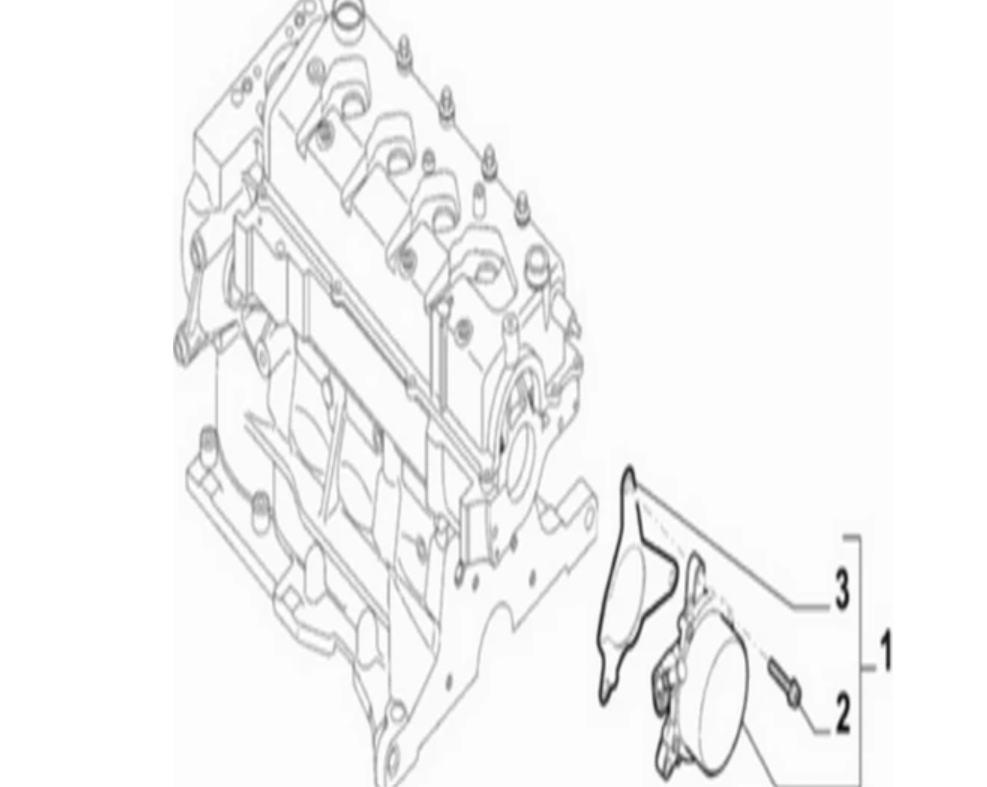
To understand the problem, you need to know where the vacuum pump is located. On the Alfa Romeo JTS engines, the vacuum pump is mounted on the side of the cylinder head, driven directly by the exhaust camshaft.
Crucially, this location puts the vacuum pump directly above the exhaust manifold—one of the hottest parts of the entire engine.
The vacuum pump is lubricated by engine oil. To keep that oil inside, a rubber gasket (or O-ring) seals the pump to the cylinder head. Over years of enduring extreme heat cycles, this rubber gasket hardens, loses its elasticity, and eventually flattens out like hard plastic. Once the seal fails, engine oil slowly seeps out, runs down the side of the engine block, and drips directly onto the sizzling hot exhaust manifold.
The result? Instant smoke and that alarming burning oil smell in your cabin.
How to Diagnose the Vacuum Pump Leak
Before you let a repair shop talk you into expensive engine diagnostics, you can easily check this yourself:
- Open the hood when the engine is cool.
- Locate the vacuum pump on the right side of the engine cylinder head (above the exhaust).
- Run your finger or a clean white paper towel underneath the bottom edge of the vacuum pump.
- If your finger comes back covered in fresh, wet engine oil, you have found the source of your burning smell.
(Not sure exactly where to look? Check our detailed exploded view diagram below to see the exact location of the vacuum pump and the gasket that causes the leak).
The Solution: A Simple Gasket Replacement
The good news is that you do not need to replace the entire, expensive vacuum pump assembly. If the pump is still generating vacuum for your brakes and isn’t making loud clicking noises, the mechanical internals are fine. You simply need to replace the failed gasket.
Replacing the vacuum pump gasket is a relatively straightforward DIY job or a quick fix for your mechanic. However, because this area is subjected to intense exhaust heat, the quality of the replacement gasket is critical.
Using a cheap, low-grade rubber seal will guarantee that the leak (and the burning smell) will return in just a few months. You need a gasket manufactured from high-temperature resistant materials (like Viton/Fluororubber) designed to withstand the harsh environment of the cylinder head.